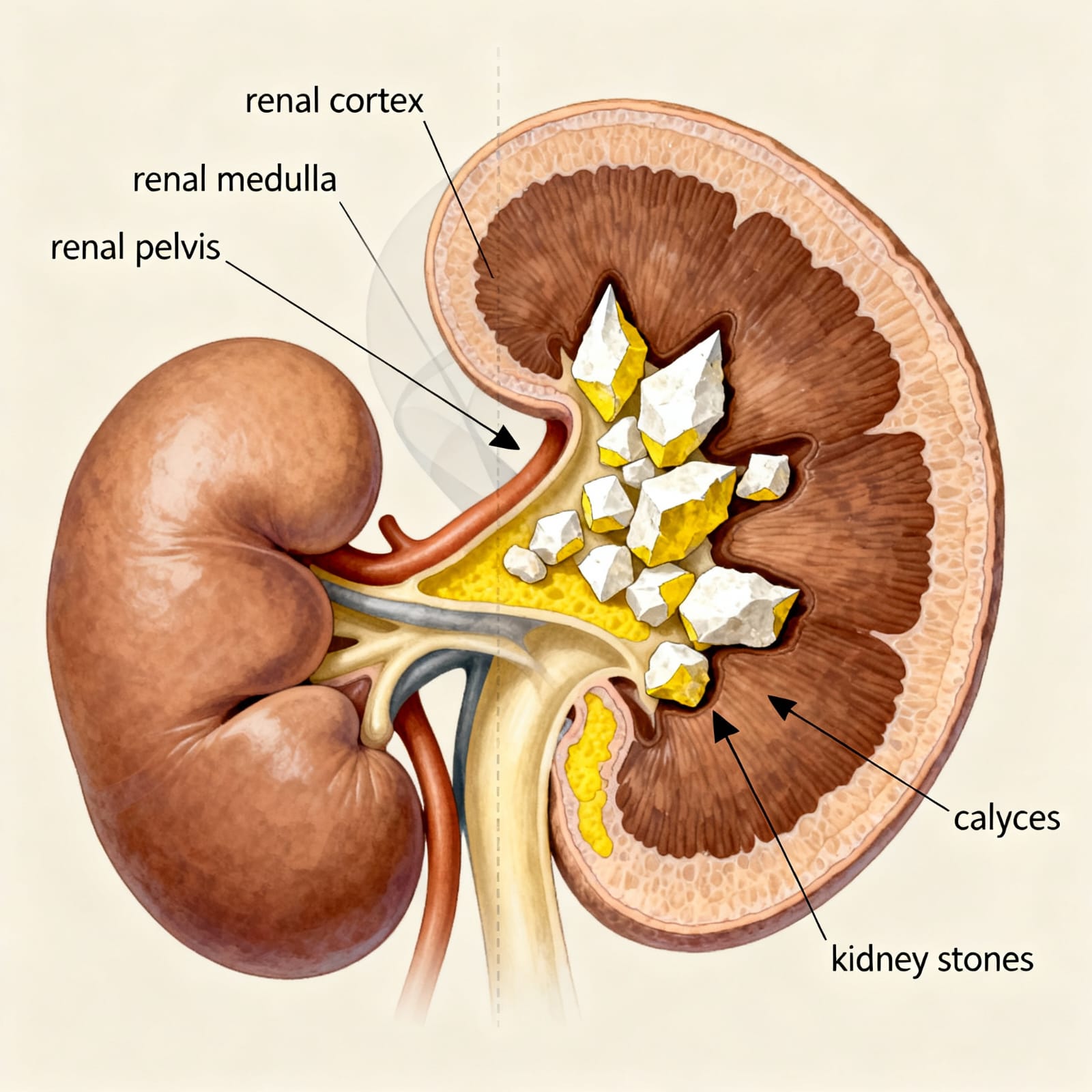
Kidney Stones: Causes, Complications & Best Treatment Options
Discover what kidney stones are, their main causes, possible
complications if untreated, and effective treatment options
including surgical and homeopathic approaches.
Learn prevention tips and expert advice to help manage and avoid
kidney stones for better kidney health.
What You Will Get in This:
- Kidney stone causes
- Kidney stone complications
- Treatment of kidney stones
- Surgical treatment for kidney stones
- Homeopathic approach to kidney stones
- Kidney stone prevention tips
- Kidney stone risk factors
- Kidney stone removal
- What causes kidney stones
- Symptoms of kidney stones
“Kidney stones are a common and painful urinary tract condition affecting millions of people worldwide. They can develop silently but often lead to severe discomfort once they start causing obstruction. Understanding the causes, complications, and available treatments—both surgical and alternative—can help in managing and preventing kidney stones effectively.”
What Are Kidney Stones?
Kidney stones are hard deposits made of minerals and salts that form inside the kidneys. These stones vary in size and shape, ranging from tiny crystals to larger stones that can block the urinary tract. Depending on their size and location, they may pass naturally or require medical intervention.
Causes of Kidney Stones
- Dehydration: Not drinking enough water makes urine more concentrated, increasing the chance of stone formation.
- Dietary habits: Excessive intake of sodium, animal proteins, and oxalate-rich foods can increase the risk.
- Family history: A genetic predisposition plays a significant role in recurrent kidney stones.
- Medical conditions: Conditions like obesity, diabetes, gout, and urinary tract infections raise the risk.
- Lifestyle factors: Sedentary lifestyle and irregular eating habits contribute to stone formation.
Complications if Left Untreated
- Severe pain: Stones can cause intense pain in the back, abdomen, or groin.
- Urinary obstruction: Larger stones may block the urinary tract, leading to urination difficulty.
- Recurrent infections: Blockages increase the risk of bacterial growth in the urinary tract.
- Kidney damage: Prolonged obstruction may impair kidney function permanently.
- Sepsis: Severe untreated infections related to stones can become life-threatening.
Treatment Options
Surgical Treatment
Medical intervention may be required if the stone is too large to pass naturally or is causing obstruction and persistent pain.
- Shock Wave Lithotripsy (SWL): Sound waves break stones into smaller fragments for easier passage.
- Ureteroscopy: A tiny scope inserted via the urethra removes or breaks down stones.
- Percutaneous Nephrolithotomy (PCNL): A minimally invasive technique for larger kidney stones.
Homeopathic Approach
Homeopathy provides a holistic approach, focusing on stimulating the body’s own healing process rather than direct surgical removal:
- Encourages natural dissolution or passage of small stones.
- Addresses underlying causes such as dehydration or metabolism imbalance.
- Provides gentle symptom relief without harsh side effects.
Prevention Tips
- Stay hydrated throughout the day.
- Eat a balanced diet rich in fruits and vegetables.
- Limit excessive salt and animal protein intake.
- Maintain a regular exercise routine.
- Get periodic health checks if you are prone to stones.
Final Thoughts
Kidney stones are manageable and preventable with early detection and proper care. Combining modern medical treatments with lifestyle improvements and holistic methods helps ensure lasting kidney health and comfort.