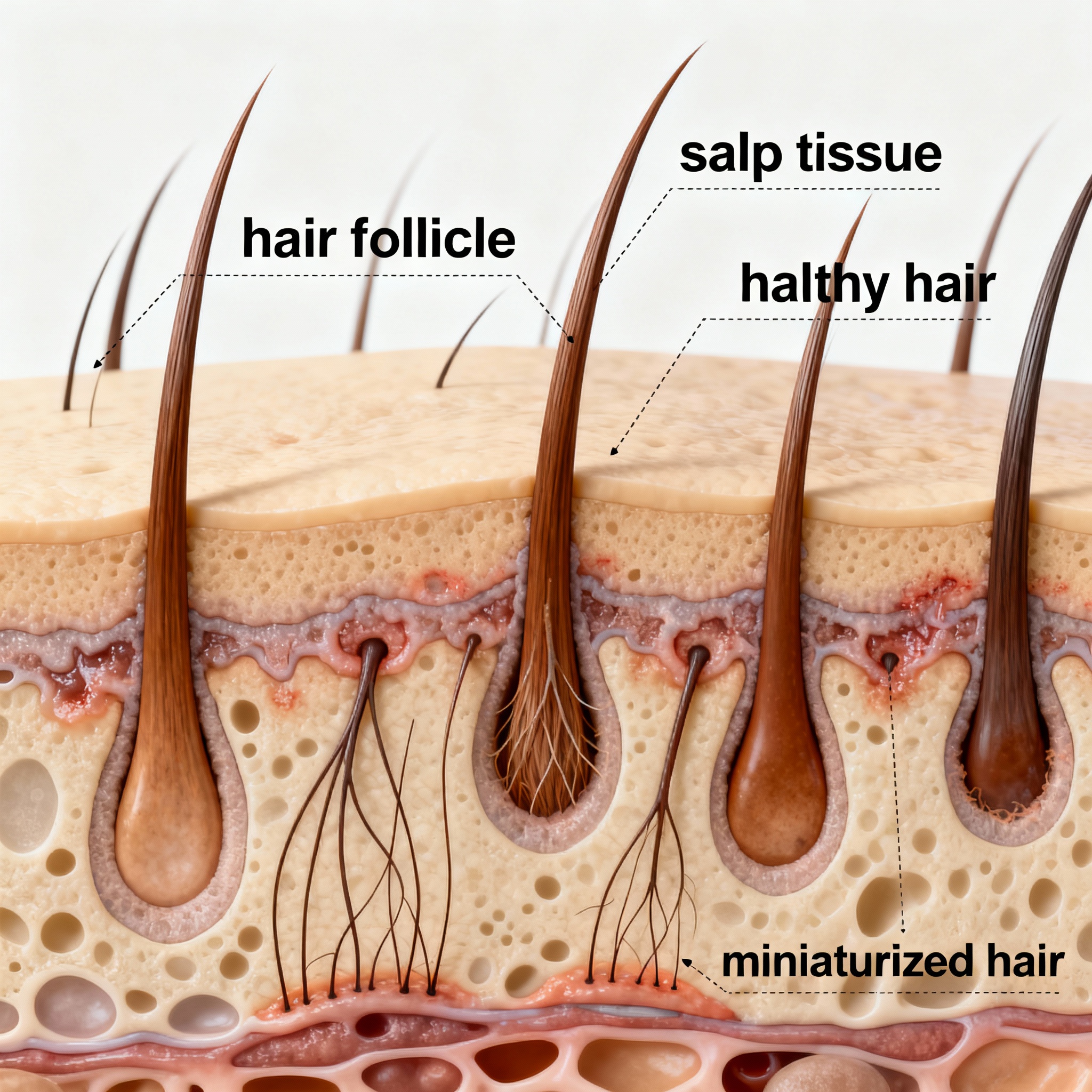
Understanding Hair Loss (Alopecia) — Causes, Complications, and Treatments
Alopecia refers to the loss of hair from the scalp or other parts of the body, which may be temporary or permanent. It can be triggered by hereditary factors, hormonal imbalances, immune system disorders, or physical and emotional stress. If untreated, hair loss can lead to psychological impacts such as reduced self-esteem.
Hair Loss (Alopecia): What Is It?
Hair loss, medically known as alopecia, is a condition characterized by excessive hair shedding beyond the normal daily loss of 50-100 hairs. Hair loss can affect both men and women and may present in various forms like patchy hair loss, gradual thinning, or sudden bald patches.
Causes of Hair Loss
-
Hair loss typically results from one or more of the following factors:
- Genetics (Androgenetic Alopecia): The most common cause, especially male and female pattern baldness, is inherited and linked to hormones like dihydrotestosterone (DHT).
- Autoimmune Conditions (Alopecia Areata): The immune system mistakenly attacks hair follicles causing patchy hair loss.
- Hormonal Changes: Pregnancy, menopause, thyroid disorders can disrupt hair growth cycles.
- Medical Conditions and Medications: Diseases like scalp infections, and medications for cancer, arthritis, or depression can induce hair loss.
- Physical or Emotional Stress: Severe stress or trauma can trigger temporary hair shedding (telogen effluvium).
- Hairstyling Practices: Tight hairstyles and harsh hair treatments can cause traction alopecia.
- Nutritional Deficiency and Environmental Factors: Lack of essential nutrients or exposure to toxins can contribute.
Complications of Untreated Hair Loss
-
If hair loss remains untreated, especially types such as alopecia
areata or cicatricial (scarring) alopecia, complications may include:
- Permanent hair loss due to follicle destruction.
- Psychological effects like depression and anxiety.
- Recurrence or progression to more extensive hair loss (totalis or universalis).
- Skin damage and increased risk of sunburn on affected scalp areas.
Treatment Options for Hair Loss
Surgical Treatments
Surgical approaches are generally considered for permanent or cicatricial alopecia where hair regrowth is unlikely.
-
Techniques include:
- Hair Transplantation: Moving hair follicles from healthy scalp areas to bald patches.
- Scalp Reduction and Flaps: Removing scarred bald scalp and stretching adjacent hair-bearing scalp.
- Composite Hair-Bearing Grafts: Using strip grafts of hair-bearing scalp for reconstruction.
These methods depend on the size, location, and shape of bald areas and are performed under anesthesia with meticulous planning.
Homeopathic Approach Overview
Homeopathy offers supportive care focusing on holistic health and addressing underlying causes such as stress and nutrition to improve hair loss conditions. While specific homeopathic medicines are not detailed here, homeopathic treatment generally aims to stimulate hair regrowth naturally without invasive procedures.